
Last updated on September 18, 2024 by Shannon

I am among the increasing number of digital nomads (and retirees) looking for ways to save costs, experience a new culture, and live in another country. But how do these places compare? I was always wishing for a comprehensive guide detailing and comparing the cost of living in the world’s major expat spots. Not a dry formula, but personalized cost of living analysis that would give me a real ideal of the lifestyle behind each cost estimate.
How I Pick a New Expat Spot
Since 2008, I have explored the world slowly, and I’ve lived everywhere from Mexico to Thailand. While I am a traveler at heart—and I have comprehensive travel guides for even more destinations—over the course of a decade I stopped for 6+ months in one spot to get a better idea of the local culture, to create a community, and to understand a new place. Now, I’ve lived in Spain full time since 2018.
It’s never been straightforward knowing if I would like a spot before I arrived. That held true even when moving to Spain. Information is often scattered, and it’s hard to know your actual costs once you’re on the ground. Using interviews with expats, my personal travels, and detailed research, the information in these comprehensive cost of living comparison guides will help you decide which spot in the world is best for your lifestyle and your goals.
Many digital nomads have an eye toward spots with a large community. Socially conscious travelers look for a chance to immerse in the local culture. Retirees have a different set of concerns, including retiree visas, healthcare systems, and quality of life.
A Little Adrift’s country-specific cost of living guides answer the tough questions, discuss quality of life in each spot, and provide thorough resources and links to continue your research, and to compare to places you’re considering living. My goal is simple: to help other expats pick a place to live that best matches their ideal cost of living, and that offers a good culture-fit.

How to Choose Between Two Destinations
Moving overseas is rarely a choice with a clearly correct answer. Should you move to Thailand or Mexico? Mexico or Costa Rica? Can you afford to move to Europe? Answering these questions comes down to knowing the pros and cons of living in each place, comparing the actual situation—as shared by expats living there (not government warnings)—and then deciding which place best fits your situation.
In your specific situation, you’ll have different priorities than other expats you meet in Facebook groups and online forums. One key to truly choosing a place that fits is reading through the key areas of concern, deciding which ones are most important to you, and then finding honest information online (or in person) to then evaluate and compare your two destinations based on that criteria. These are the things I keep in mind when comparing living one place versus another.
Assess Safety the Safely Accurately
Which country is safer on a country-wide level, and then specifically in the cities/regions you’re considering?
Talking safety is an inflammatory issue in some regions because of the wide variance (Mexico, for example, is fairly safe in some areas and patently unsafe in others). A country can have serious safety concerns while also having quite safe regions (the Mexico’s Yucatan Peninsula, for example, is a safer area to live in Mexico compared to pretty much anywhere more northern, or in regions that border areas with heavy cartel activity).
Then there are countries that just have overall general safety throughout, with violent crimes being quite rare, and only theft being a key concern. That’s the case in Southeast Asia, for example. Overall it’s safe, but living in Bangkok will still have a different safety profile than living in Chiang Mai.
What type of safety concerns are there in each country?

Safety is a complex topic. By many statistics, travelers are more likely face critical injuries from traffic accidents abroad than to face any violent crime. If you are considering moving to Thailand, Vietnam, or Bali—and you would buy a motorbike once there as is common for expats—you have now significantly shifted your safety profile for those countries.
Moving to Europe, on the other hand, has so many public transportation options and regulations that you are relatively safer moving there compared to Southeast Asia, at least on this core issue. Your chance of serious transportation injuries goes way down in Portugal or Spain, for example.
Physical safety varies as well, in terms of crime statistics and whatnot. Theft is an ever-present concern in many countries with significant wealth inequality, and you would need to research your potential destination to accurately assess and compare this aspect.
Is the government stable and/or high-functioning?
When leaving behind your home country, you make a trade—even a bargain in some cases. You leave behind a government and processes that you inherently understand (and sometimes have foundational and ideological kinship with) and trade that for a new (and often vastly different) system of government.
In Thailand, that means living in a country where you physically stand up for the Royal Family and you submit to military-enforced curfews and governance during troubled times.
In Costa Rica, you are folded into a the fabric of a country and government prioritizing ecologically sound environmental policies, but still facing criticism on how indigenous peoples are treated.
And in Europe, you may find yourself living in a city embroiled in heated debate about immigration and politics. That’s the case in my expat home of Barcelona, where separatists shut down the city almost annually.
In each place you could live, the government will have different policies about how expats can interact with the government. In some cases there is a clear path to citizenship, others more stringently enforce policies to keep expats out of the daily life of the country’s politics and government. And in all cases, if something were to happen, this new government is the one you will rely on for help in a natural disaster or crisis.
Look at your potential new homes and think about which of your options best resonates with your values and views.

-XL.jpg)
Consider the Culture
How close is the new culture to your own, and can you see yourself assimilating?
This is one area few people consider up front, but it’s an issue you will face in the months and years after you move to a new place. Although we love the idea of sinking into a new culture and becoming “one” with our new home, that’s easier said than done. Some cultures are so different than our own that it is difficult to be anything other than the eternal outsider.
To an extent, this is a commonly accepted attitude in some expat, digital nomad, and retiree populations—you may be moving to a new place for financial, work, or other concerns, with no desire to become part of the culture of Vietnam / Indonesia / Mexio, etc.
But if you hope to weave yourself into the fabric of life in your new home, then you might need to consider how close it is to your home culture. In some cases, a North American or European moving to Central or South America may feel more able to integrate into the local community than if they had chosen a place in Southeast Asia, for example. This has been the case for me, and is largely why I chose to become an expat in Spain.

Are you willing to learn the language?
Look at the languages in each place and assess if you are willing to learn the language, and if your answer to that question will impact your ability to enjoy your new expat home. For English speakers, learning a tonal language like Thai will take longer and require far more work and more time than learning Spanish.
Evaluate Your Finances
How much will it cost to return to see family and friends or take care of business?
Too often, I see expats and digital nomads touting the extremely low cost of living in Thailand without factoring in how much it costs to conduct international business and make trips home to see family.
With low-cost airlines running between Central America and the U.S., you are looking at a much lower price tag than if you move to Asia, where roundtrip flights easily cost a grand during the high seasons.
Perhaps you are retiring and have few reasons to return to your home country—then this issue is of much lower concern for you. But if you return home even once a year, then those expenses, when factored across a year, might adjust your cost of living comparisons to be on par with another location on your list.
How does your lifestyle compare to the budgets you have viewed?
The blogosphere is filled with cost of living posts for spots popular with 20- and 30-something digital nomads. These expats (myself included before I lived abroad with my son) often have different lifestyles and priorities than a family moving overseas for work, or a retiree deciding on a place to live for the next few decades on a social security check. Digital noamds may pay a lot for speedy internet, hipster lattes, and socializing, you may need to more thoroughly research health insurance and fees associated with buying a condo or property.
Ask yourself: Are you willing and happy to eat local street food several times a week (or a day!), will you cook, or do you plan to eat at high-end expat spots? All of these factors will impact your own daily cost of living and can dramatically impact your monthly expenses, which is important if you are moving to a new place with a specific budget in mind.
Although I find bloggers sharing their actual costs of living provides deeper nuance on what you get for your money, sites like Numbeo, Nomad List, and Expatistan offer more objective and directly comparable cost of living analyses.


Figure Out the Practical Details
Can you get a visa?
There’s a certain nonchalance in the expat and digital nomad world implying that you can move almost anywhere in the world if you’re smart enough, brave enough, or want it enough.
That’s not true.
The only place that has to let you live there is your home country; the rest of the world isn’t obligated to accept your request for a residency or retirement visa. And in some cases, these governments make it downright tricky to secure a residency visa unless you meet a series of sometimes granularly specific terms and conditions.
If you’re retiring abroad and you have a good chunk of money, you’re in the best possible scenario as most foreign governments (and all that I have profiled and compared in the Cost of Living Guides) have clear rules and requirements for securing a retirement visa.
If you’re living as a digital nomad or obtaining a work visa, then your possible spots narrow considerably. The pandemic actually accelerated the remote work trend, and governments around the world now offer digital nomad visas specifically. There are Many gorgeous countries now offer digital nomad visas for those with remote-based income, including: Costa Rica, Croatia, Spain, Portugal, Estonia, the Republic of Georgia, and more.
Younger expats and digital nomads should also consider student visa policies by attending ongoing language classes (my friends have done this everywhere from Thailand to Spain), or they can (and often do) flout the visa policies and “live” in a place on a series of tourist visas.
That’s a cinch in a place like Mexico, where North Americans receive six months on arrival and an (often) unlimited number of re-entries.
But in Thailand, Vietnam, and other places, your time living there becomes a series of elaborate border crossings and visa extensions, and every time you leave there’s a chance they won’t let you return. “Living” somewhere on a tourist visa works if you are testing the waters to decide if it’s a good fit for you, but you should factor into your choices how likely it is that you can secure a longer-term residency visa.

Most Popular, Affordable Places for Expats
The cost of living in these cities is favorable for retirees, and the visa policies are doable. Here’s where a large number of expats call home.
Ajijic, Mexico
Ajijic is a place with good vibes for expats, especially retirees. Most look there first for its low cost of living, and are pulled in by the warm climate and strong expat community. Expect a cost of living in Ajijic lower than many other popular expat destinations in Mexico. The lowest possible average cost of living for a single person sits around $750-$950 per month, including rent, food, and other expenses.
The lower cost of living in Ajijic compared to Mexico City or Playa del Carmen is due to the town’s smaller size and lower demand for goods and services. You’ll pay a ton more to live the Yucatan Peninsula, for example (but about on par with the price of living in Oaxaca).
Boquete, Panama
The charm of Boquete hits most expats first, and I loved the feel of the town when my dad and I location scouted for his own retirement. Like all of the best expat spots, it boasts an affordable cost of living with temperate weather and a lot of other expats nearby.
The average cost of living for a single person in Boquete is around $900-$1,100 per month, including rent, food, and other expenses. It costs more than smaller towns in Mexico, but that’s because it’s one of Panama’s top spots. And that figure is on the low side because you may needed to travel for healthcare. There’s a similarly great expat community in nearby David, and many retirees have bought a home in Boquete and use it as an alternative to Florida, to escape cold winters in the U.S. or Canada.
Chiang Mai, Thailand
If you’re researching where to live, you’ve already come across Chiang Mai, one of my favorite spots in the world. I was first drawn in by the expat community and good vibes, and stayed for the low costs, access to healthcare, and amazing food.
Most retirees are there for the city’s laid-back atmosphere and affordable living costs, while digital nomads fill the coffee shops in Chiang Mai and coworking spaces, making the most of the good community and speedy wifi. The baseline cost of living in Chiang Mai is lower than in Bangkok or the Thai islands, with the average cost of living for a single person coming in at a base of $800 per month, including rent, food, and other expenses.
San Miguel de Allende, Mexico
San Miguel de Allende is a popular destination for retirees due to its beautiful colonial-style architecture, rich culture, and welcoming atmosphere. The average cost of living for a single person in San Miguel de Allende is around $800-$1,000 per month, including rent, food, and other expenses.
Bali, Indonesia
Bali needs no introduction as a digital nomad hotspot. It’s hugely popular with travelers, and many stay on for years due to its low cost of living, lively beach communities, and the vibrant Balinese culture.
Expect an average cost of living for a single person in Bali to come in at $850+ per month, including rent, food, and other expenses. Locals in Bali live at a much lower price-point, but an expat’s expenses creep higher once you factor in the yoga classes and expat eateries that are de rigueur.

Medellin, Colombia
As an international expat destination, Medellín attracts more of the digital nomad bent than the retirement one. Known as the “City of Eternal Spring,” the climate hovers around a pleasant 70°F year-round, making it a comfortable option. Friends of mine, many of them digital nomads, lived here for years. Depending on lifestyle, you could live comfortably on $800 to $1,200 per month, covering rent in trendy neighborhoods like El Poblado, eating out at local restaurants, and enjoying Medellín’s vibrant nightlife.
Lisbon, Portugal
Lisbon is a favorite among digital nomads, thanks the affordable lifestyle down here in Southern Europe, its vibrant culture, and year-round sunny weather. Plus, the city oozes historic charm, coupled with modern conveniences, it’s easy to see why it has grown in popularity in the past five years. Many of my digital nomad friends have lived here for years, drawn by the lively expat community and co-working spaces in neighborhoods like Bairro Alto and Cais do Sodré.
Expect to live on $1,200 to $1,800 per month as a single person, depending on lifestyle, with rent being the largest expense as housing costs have increased in recent years. Despite this, Lisbon remains more affordable than other major European cities. The social scene, particularly among male nomads, is another draw, with many praising the nightlife and the friendly, outgoing locals, adding another layer to the city’s appeal.
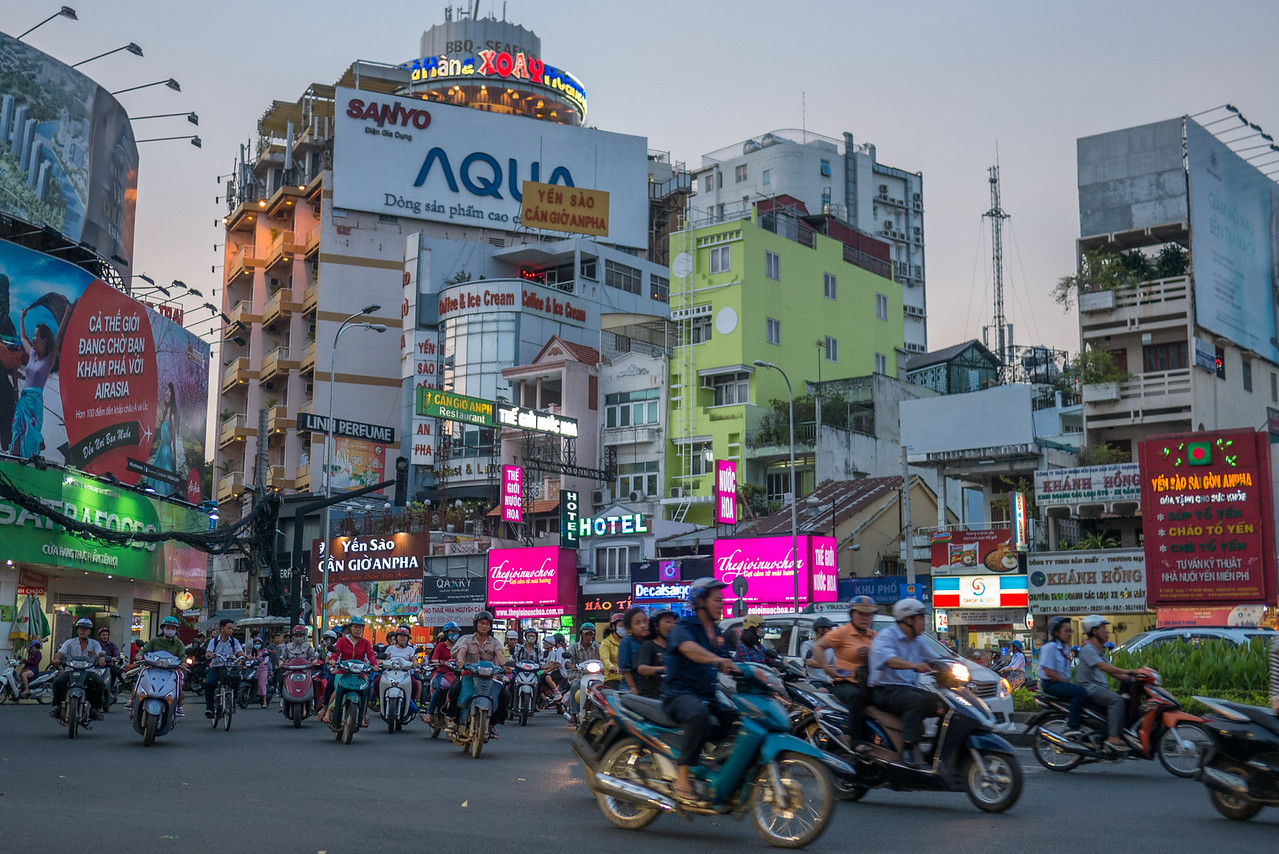
Ho Chi Minh City, Vietnam
Ho Chi Minh City, still often called Saigon by locals, has become a go-to destination for digital nomads seeking a balance of affordability, culture, and dynamic energy. It’s certainly a noisier life than many might want, given its bustling streets and street food culture, but that means Saigon offers an exciting blend of modern and traditional life. Several of my digital nomad friends have called this city home for years, lured by the low costs, the food, and the friends.
You can live comfortably in HCMC on $700 to $1,000 per month, depending on your neighborhood and lifestyle. This covers rent, food, and other daily expenses, with the city’s famous street food being both a highlight and a budget-friendly way to eat well. The digital nomad crowd in Saigon is diverse, and expats are sure to find a group of new friends.
Cost of Living Comparison
Researching the right spot to live? These comprehensive Cost of Living Guides share extensive resources or all the major expat spots around the world. These guides include thorough breakdowns of the culture, quality of life, vibe, and—importantly—budget breakdowns and comparisons so you can better plan which spot in the world best meets your needs.









Resources to Research Moving Overseas
Books
- A Better Life for Half the Price: This book is big on inspiration if you are still casting a wide net on places you might want to live.
- Getting Out: Your Guide to Leaving America: The book above, Better Life is about deciding where is a good culture fit, whereas this book offers more comprehensive information on how to actually make a move happen. Of the many options, you will find on Amazon, this is the best one covering the practicalities, with the hands-on information you need as someone considering living anywhere outside the U.S. If you’re new all the researching, this book will kick-start your process. And if you are laser-focused on the retirement topic, versus moving overseas at a different state in life, this retirement guide has great advice.
- The Tax Book for U.S. Expats: This is a well-priced guide and valuable because it’s unique to expats and retirees filing taxes abroad. It gives a granular look at forms, terms, and sorting out exactly how to file — good for those with complicated tax situations.
More recently released, U.S. Taxes for Worldly Americans goes broader and is aimed at younger expats and digital nomads still working and handling how to earn income overseas, pay taxes, and live a nomadic life. It doesn’t explain the terms or niche situations/forms as well as the other book, but instead acts as a guide for younger travelers.
Depending on your situation, pick up a copy of one of these guides before you leave so that you will have a tax system in place that maximizes the opportunities to easily file.
Insurance
There are three layers of insurance soon-to-be expats should consider. One is travel insurance while you are on the road visiting the places you may move to eventually. After 10 years on the road, I consistently carry a travel policy the moment I book tickets somewhere, even if I am already living as an expat with local health insurance. The second insurance is health insurance. If you are legally moving to a new place, you may need to provide proof of health insurance before they will consider your visa application (Spain required this). And lastly, gear insurance is important, particularly if you move to countries with high levels of inequality, or if you carry expensive camera gear or electronics. Here are the companies I use, and the others that I researched and considered when moving overseas.
- SafetyWing is the best travel medical insurance for digital nomads as it’s designed specifically for them.
- IMG Global is a solid travel insurance option when you are in transit to a new place, and for your first year of health insurance while you’re figuring out the local system. My full review is here.
- For meeting international health insurance standards that still cover you in the U.S., I use IMG Global and my expat health insurance plan was affordable and paid out on my claims without issue.
- For property insurance once you’re living overseas, I’ve used Clements for many years now and highly recommend them. Non-Americans and others should consider Protect My Bubble and Photo Guard.
Trip Planning Resources
Cost of Living Comparison
Researching the right spot to live? These comprehensive Cost of Living Guides share extensive resources or all the major expat spots around the world. These guides include thorough breakdowns of the culture, quality of life, vibe, and—importantly—budget breakdowns and comparisons so you can better plan which spot in the world best meets your needs.
No posts